The Story Behind the System
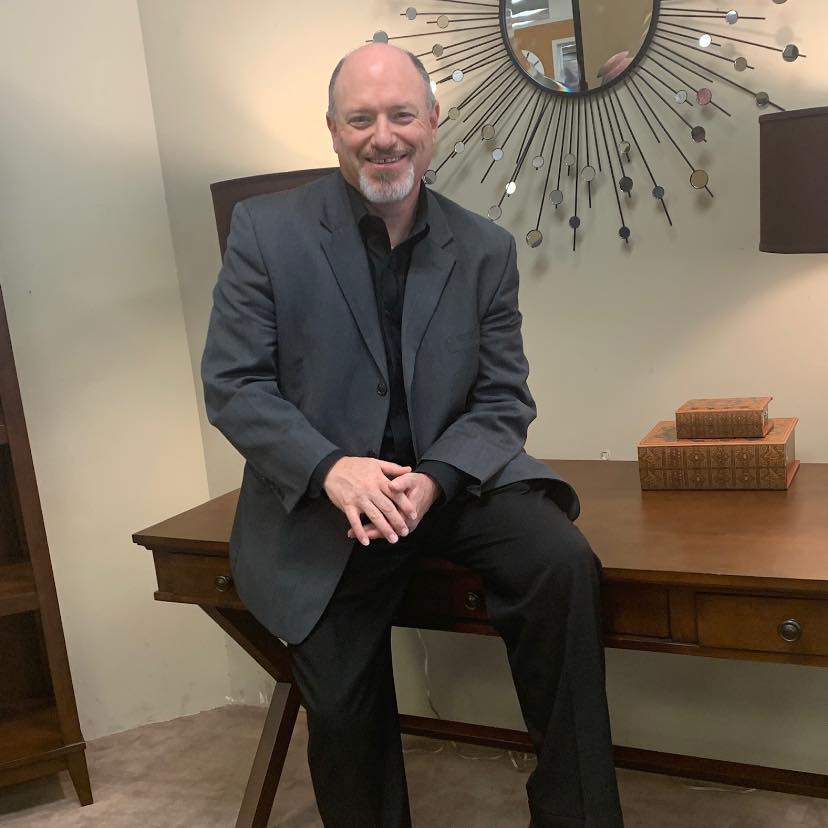
Phil Lower
Founder, Grandpa Owl Training LLC · Creator, The Wise Nest Family Playbook
Before he was a leadership expert, before he trained nearly two thousand leaders and executives from five continents, before he built the system you are holding right now —
Phil Lower was a five-year-old boy without a father.
His dad was gone. The home in Toledo carried an emotional charge that children shouldn’t have to navigate alone. And so, every summer, he was sent east to Gates Mills, Ohio — to his grandparents’ home, a place he would later describe, simply, as a bastion of sanity and love.
The Grandfather
His grandfather was not a soft man.
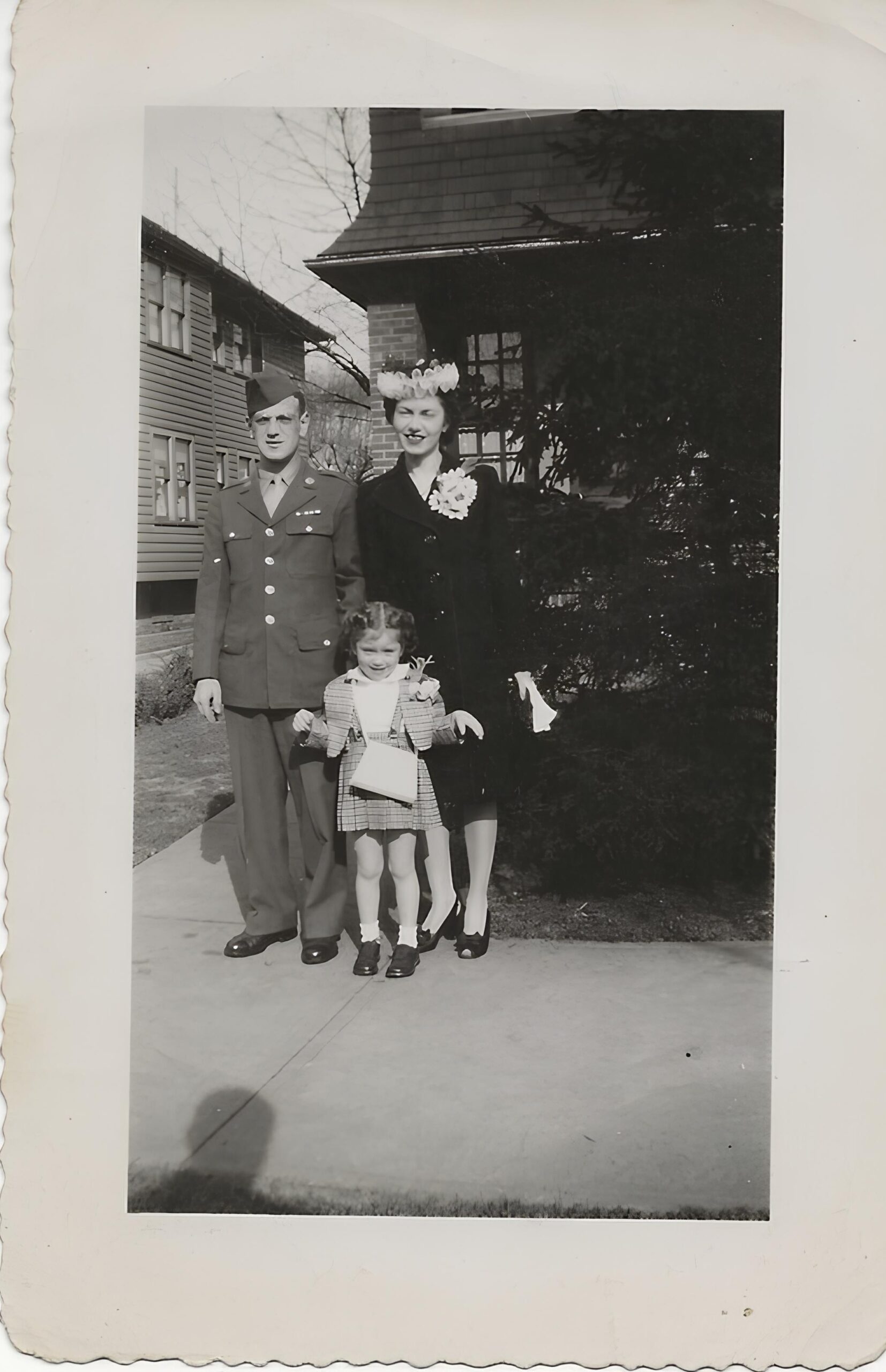
Werner and Anna Kayem with their daughter Marilyn — after his return from service. The man Grandpa Owl was named for.
Before he was anyone’s grandfather, he had been dropped by air into Nazi-occupied France — one member of an elite three-man team working alongside the French Resistance before D-Day, finding German officers, extracting what they knew. He had earned a Master’s degree in Engineering from the University of Hamburg. His family had owned a farm and a white wine vineyard near Strasbourg, France — a property they had to sell before the United States government would grant them entry.
He had seen the worst of what the world could do. And he had come through it with his character completely intact.
His grandfather was the CFO of Central Brass. Every summer in Gates Mills, the boy watched him. He watched how his grandfather sat at his desk and managed the company finances with quiet precision. The story was told to Phil years later by people who had been there — people who respected the man deeply. His grandfather walked onto that factory floor the day the workers were ready to strike. He did not come with authority. He came with something more durable: the trust of men who knew his war record and had watched his integrity hold under conditions most people never face. They told him they would not strike. Not because they were ordered not to. Because they trusted the man standing in front of them. Phil learned to chop wood. Drive a tractor. Get grease under his fingernails. Clear woodland trails with his own hands.
But what Phil remembers most isn’t any of that.
Whenever he made a mistake — and an energetic, curious boy makes many — his grandfather never shamed him. He sat down with him. Looked at him. And explained the what and the why of the mistake.
Always.
His grandfather died Phil’s freshman year in high school.
The Career
Phil built a career doing the work his grandfather had, without knowing it, trained him for.
He started his first company at twenty-nine. Taught at the college level. Earned an ICF-accredited coaching certification and, later, a Master’s in Organizational Management focused on operations and leadership. He worked with clients across North America, Latin America, Asia, the Middle East, and Europe. Eventually, a Fortune 250 company brought him on to run leadership development programs across the Northeast and Southeast of the country — working with nearly two thousand team members.
He had found his work. He was good at it.
And throughout all of it — in coaching calls, workshops, and training programs with professionals from five continents, in sessions that shaped thousands of careers — he kept encountering the same pattern. The most effective leaders practiced fifteen specific behaviors consistently. The ones who struggled, regardless of their intelligence or technical skill or formal training, had gaps in those same fifteen areas.
It took him years to recognize that the fifteen behaviors he was observing in world-class leaders were the same fifteen things his grandfather had modeled for him in a kitchen in Gates Mills, Ohio, when he was a boy.
There is a particular irony that lives inside anyone who spends their career teaching people how to lead: the gap between what you know and what you practice at home. Phil knew the gap was there. He was still closing it.
The Crucible
November 2016.
Guillain-Barré Syndrome.
It is a rare neurological disease in which the body’s own immune system attacks the nervous system. It strips the body of its ability to function — quickly, and without warning. Phil arrived at a hospital emergency room within thirty-six hours of dying. The disease had progressed to the point where his organs were beginning to fail.
He survived. But survival was only the beginning. Guillain-Barré takes from you everything a child takes for granted — movement, coordination, strength, the ordinary physical mechanics of being alive. Phil had to relearn all of it, while still having to work, still having to provide, still having to be a father. His body was not working normally. So, he used what was working: his mind. He read. He studied. He built. He did what a person does when one door closes completely and another has not yet appeared.
Then the Fortune 250 company restructured. The entire leadership development team was dissolved. A man who had spent years teaching people to lead through uncertainty found himself unable to find consistent work.
And then his family became homeless.
He does not lead with that detail at dinner parties. But it lives inside every page of The Wise Nest Family Playbook.
Because it was there — in a room with two beds and a kitchenette designed for travelers rather than families — that Phil did the most important work of his life.
The Kitchen Table
He started doing what his grandfather had done for him.
He sat down with his daughters. He explained the what and the why. Not as a trainer running a program. Not as a coach with a framework. As a father in a hotel kitchenette, teaching his daughters to cook — then staying at the table to talk about listening, and keeping promises, and what it means to show up for people even when it costs you something.
He had been building the Rule of 15 for years in boardrooms and coaching calls across five continents. He had published books on its principles. He had trained thousands of people in its behaviors.
But it took a hotel kitchenette, two daughters, and a global pandemic to show him what it was actually for.
He watched those girls accelerate. Not instantly. Not without struggle. But the COVID lockdowns that stalled children across the country did not stop his daughters. They faced challenge after challenge over those years and came through each one with a poise and a grounded determination that told him, in a way no client success story ever could, that this system worked.
Not because it was sophisticated. Because it was honest. Because it met each of them exactly where they were. Because it was done at a kitchen table — or what passed for one.
The Owl
A question that had been forming for years.
A few years ago, a conversation with a close friend from college turned to a question that had been forming for years: what would be the face of this work? What character could carry its wisdom to children?
They landed on owls.
And then Phil’s eldest daughter — who had been his co-author, his sounding board, his kitchen table companion through years that would have broken lesser spirits — started describing species. A Great Horned Owl. A Barn Owl. An Eagle-Owl from another continent. A Spectacled Owl from the rainforest. They began building a pantheon of characters spanning cultures, centuries, and hemispheres, each one carrying a piece of the wisdom the Rule of 15 was built on.
Grandpa Owl would be the North American Great Horned Owl.
Patient. Watchful. Ancient. The one who always believed you had greater potential than you knew. The one who sat down and explained the what and the why. Every time.
Phil had not lost his grandfather at all.
He had spent fifty years finding the right way to give him back to the world.
What This Is For
There are millions of children growing up right now without a grandfather like the one Phil had in Gates Mills.
Without a patient adult who sets down what they are doing, turns to face them, and communicates — through presence, not words — you are the most important thing in this room right now.
The Wise Nest Family Playbook exists for those children. And for the parents and grandparents who want to be that for them — but need a structure, a language, a weekly rhythm that turns that intention into something real.
Fifteen behaviors. Seventy-five core values. A daily system built not for perfect families, but for willing ones. A system that takes twenty minutes a day and builds something that lasts a lifetime.
Phil’s daughters are inside it. His grandfather is inside it. Three years in a hotel are inside it. Every leader from five continents who taught him something is in here somewhere.
And somewhere inside it is a child who reminds him of himself — energetic, imperfect, carrying things they didn’t choose — who needs exactly what his grandfather gave him.
Not perfection. Not credentials. Not a program just for a certificate at the end.
A patient adult. A real conversation. A kitchen table.
Credentials
—Certified Professional Coach (ICF-accredited)
—Master’s in Organizational Management (MAOM) — focused on operations and leadership
—Trained in MBTI-based temperament assessment
—Coached and trained leaders from 30+ countries across five continents
—Nearly two thousand team members reached through Fortune 250 leadership development work
—Founder, Grandpa Owl Training LLC
—Creator, The Wise Nest Family Playbook and the Rule of 15
—Developer, The Wise Nest Temperament Discovery Guide
What Others Say
Families and leaders who have worked with Phil.
If you have ever worked in a team environment where it seemed difficult to get ahead, I can certainly relate. It wasn’t until I was introduced to Phil Lower that I learned why some of the teams I worked with in the past weren’t successful. Phil is a creative problem solver with a no-nonsense way of getting to the root of what may be causing issues within your company. He is passionate about seeing leaders, employee engagement, and your ROI grow. What Phil has built dramatically improves everyone on your team’s performance. Thank you, Phil, for everything you do to help leaders work together and make a difference in the world.
— Jocelyn Jones
Phil is a great leadership coach. His tools are world class, and he brings his passion and personal touch to every engagement. Phil was my professional coach for about a year. In that time, he helped me find clarity and understand my personal value proposition. His coaching helped me prepare for my current role as CEO of Vunani Corporate Finance. It gave me the courage and clarity I needed to win at work. I look forward to future engagements with Phil.
— Sam Mokorosi, CEO · Vunani Corporate Finance